Why Commercial Treadmill Belts Wear Faster
Commercial treadmill belts wear faster because they absorb intense, repetitive impact forces in multi-user environments where maintenance is often inconsistent. Understanding why commercial treadmill belts wear faster is the first step toward stopping the cycle of early replacements and unexpected downtime. High-traffic gyms in South Texas and across the country lose thousands of dollars annually to premature belt failures that proper lubrication, correct belt specs, and routine inspections could prevent. This article breaks down the exact causes, compares belt types, and gives you a practical maintenance framework built on 2026 commercial standards.
Why do commercial treadmill belts wear faster than residential ones?
The core reason commercial treadmill belts degrade faster is the combination of extreme mechanical load, continuous daily use, and maintenance gaps that residential machines never face. A gym treadmill running eight to twelve hours per day accumulates stress that a home unit might see in several years. Three forces drive this accelerated wear: impact load, friction, and belt construction mismatch.
Mechanical failures in commercial gym equipment are 60–70% attributable to inadequate lubrication and poor cleaning discipline rather than design flaws. That figure tells you the problem is mostly preventable. Most facility managers assume belts simply wear out from use. The real culprit is friction buildup between the belt and the deck, which compounds every time a user steps on an under-lubricated surface.
Wear rates also correlate more with usage intensity and user weight than raw mileage alone. A facility with heavier users running at high inclines will burn through belts faster than one with lighter users walking at moderate speeds, even if both machines log the same total hours.
How high-impact forces accelerate belt and deck wear
Running generates impact forces of 2–3 times a user’s body weight with every stride. On a commercial treadmill running 200-pound users back to back, that translates to 400–600 pounds of force hitting the belt surface thousands of times per hour. The belt flexes, compresses, and rebounds continuously under that load.
Residential or undersized machines flex excessively under commercial loads. That flex creates micro-tears in the belt material over time, leading to fraying at the edges and stretching along the center. Once a belt stretches unevenly, it tracks poorly, increases motor strain, and accelerates deck wear simultaneously.
Key impact-related wear factors include:
- User weight concentration: Heavier users concentrate force on a smaller belt surface area, increasing localized wear.
- Incline training: Higher incline angles shift the user’s weight toward the rear of the belt, creating uneven wear patterns.
- Running speed: Faster speeds increase the frequency of impact cycles per minute, compressing the belt’s fatigue timeline.
- Machine frame rigidity: Lighter commercial frames flex under load, transferring stress directly into the belt and deck interface.
Pro Tip: Track your heaviest-use machines separately. If a specific treadmill serves a boot camp class daily, schedule its lubrication and inspection at half the normal interval.
Does belt construction determine how long a commercial belt lasts?
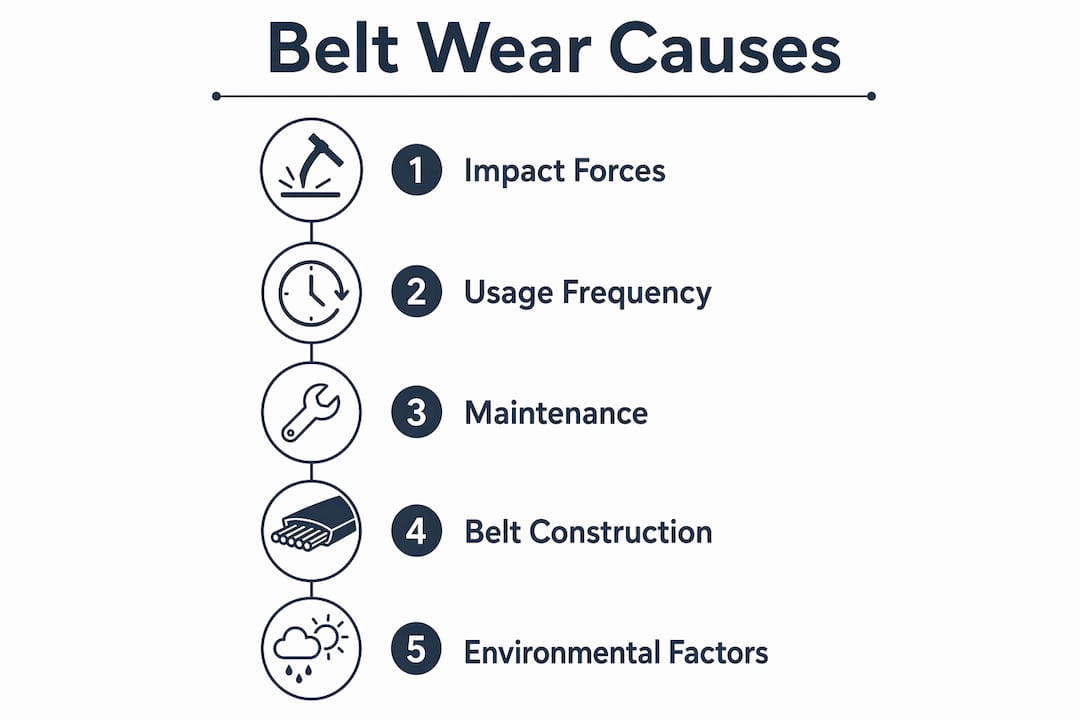
Belt construction is the single biggest variable in treadmill belt longevity under commercial conditions. Single-ply belts measuring 1.6–1.8mm show 3.2 times higher replacement frequency under multi-user conditions compared to 2.5mm or thicker multi-ply belts. That difference in replacement frequency translates directly into labor costs, machine downtime, and member experience.
Commercial-grade 2-ply and 3-ply belts are rated for over 50,000 hours of operation. A single-ply residential belt installed on a commercial machine will fail in a fraction of that time, often within 6–12 months of heavy use. The construction difference comes down to three elements: rubber backing density, woven fabric weave tightness, and surface coating type.
| Belt Type | Thickness | Rated Lifespan | Best Use Case |
|---|---|---|---|
| Single-ply residential | 1.6–1.8mm | 1,000–3,000 hours | Home use, light exercise |
| 2-ply commercial | 2.0–2.5mm | 20,000–35,000 hours | Mid-traffic gyms, hotels |
| 3-ply commercial | 2.5mm+ | 50,000+ hours | High-traffic fitness centers |
| Slat-belt | N/A | Near-unlimited | Professional sports facilities |
Slat-belt treadmills, used in professional sports facilities, eliminate belt slippage and excessive stretching entirely. They carry a significant premium but represent the ceiling of belt durability for facilities that cannot afford downtime.
Pro Tip: When purchasing replacement belts, always verify the ply count and thickness against the manufacturer’s commercial spec sheet. A belt labeled “commercial quality” without a ply rating is almost always a single-ply product.
How does inadequate maintenance speed up belt failure?
Maintenance is where most facilities lose the battle against belt wear. Lubrication every 150–300 hours is the standard for commercial treadmills. Skipping that schedule reduces belt life from a typical 24–36 months down to just 6–12 months. That is not a minor difference. It is the difference between replacing a belt once every two years versus replacing it twice per year.
The sequence of failure from neglected lubrication follows a predictable pattern:
- Lubrication depletes between the belt and deck, increasing friction.
- Heat builds up at the belt-to-deck interface, degrading the rubber backing.
- The motor compensates by drawing more current, increasing thermal stress on motor components.
- The belt stretches and slips, prompting staff to over-tighten the tension bolts.
- Over-tightening damages bearings and accelerates belt edge fraying, compounding the original problem.
“Treat the belt-to-deck interface as a high-friction system requiring both chemical and mechanical controls to mitigate heat buildup and wear.” — NTAIFitness maintenance guidance
Over-tightening belts without verifying deck lubrication creates excessive load on motor bearings and accelerates both motor and belt failure. The 2-3 inch lift test is the correct diagnostic first step before any tension adjustment. Lift the belt at the midpoint of the deck. If it lifts more than 3 inches, it may need tightening. If it lifts less than 2 inches, it is already too tight.
Monthly deck lubrication can extend belt and deck life by 100–150%, saving thousands of dollars annually across a multi-unit facility. For a gym running ten treadmills, that savings compounds quickly into a meaningful budget line.
What environmental factors shorten treadmill belt life?
The gym environment itself attacks treadmill belts in ways most managers underestimate. Sweat and salt corrosion cause chemical damage to belts and decks over time, particularly in South Texas where humidity accelerates the process. Salt from sweat penetrates the belt’s fabric layers, weakening the bond between plies and degrading the rubber backing from the inside out.
Additional environmental wear factors include:
- Dust and debris: Fine particles act as abrasives between the belt and deck, increasing friction even on a freshly lubricated surface.
- Humidity fluctuations: Repeated expansion and contraction of belt materials from humidity changes cause micro-cracking in the rubber backing.
- Roller design: Crowned rollers can cause uneven belt stretching in commercial settings, whereas straight rollers with scheduled adjustments reduce long-term deformation.
- Cushioning system condition: Worn cushioning transfers more impact force directly into the belt and deck, increasing stress at the contact surface.
The treadmill running surface and deck condition interact directly. A worn deck increases friction even when the belt itself is new, which is why a worn deck is often the hidden culprit behind accelerated belt failure and motor strain rather than the belt alone.
Practical steps to extend commercial treadmill belt life
Extending belt life in a commercial facility requires a documented protocol, not ad-hoc repairs when something breaks. The following steps reflect 2026 commercial maintenance standards and apply directly to high-traffic gym environments.
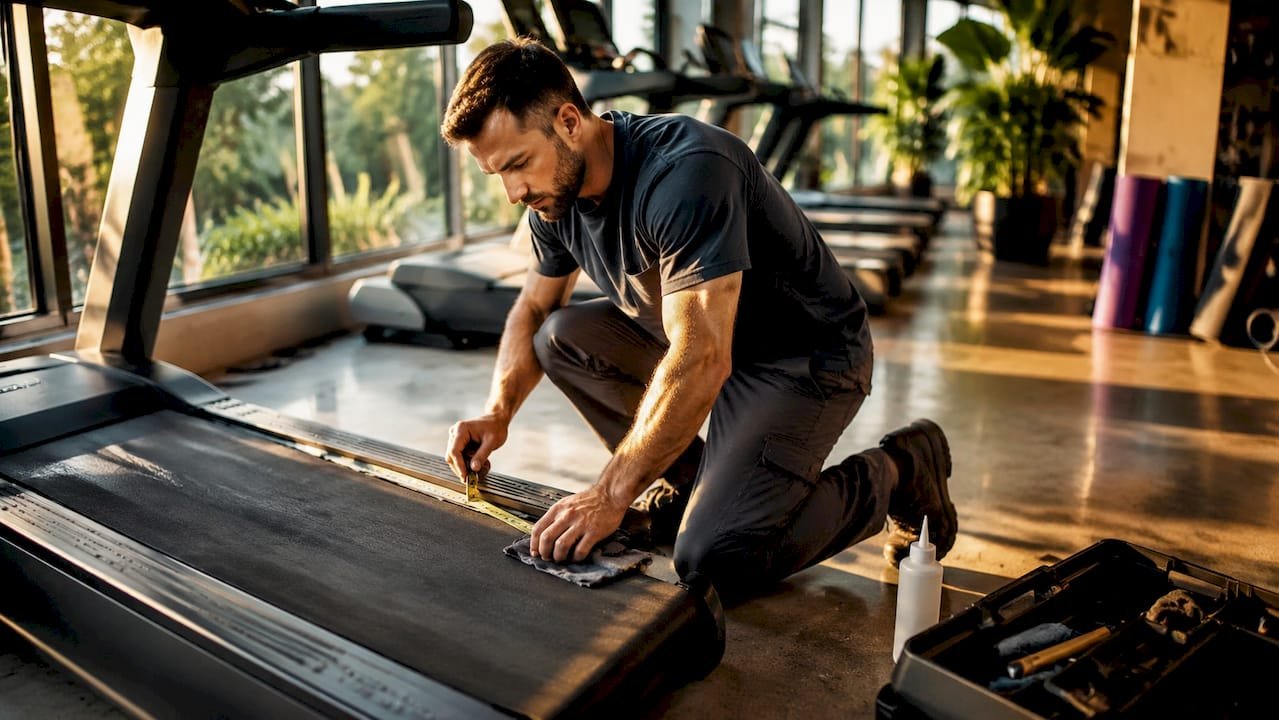
- Lubricate monthly. Apply silicone-based lubricant between the belt and deck every 150 hours of use or once per month, whichever comes first. Never use WD-40 or petroleum-based products.
- Perform the lift test weekly. Check belt tension at the midpoint. The correct range is 2–3 inches of lift. Adjust only after confirming lubrication is current.
- Clean the belt surface after every shift. Use a damp cloth to remove sweat residue and debris. This prevents salt buildup and abrasive particle accumulation.
- Inspect belt edges monthly. Fraying edges signal misalignment or over-tightening. Catch this early to avoid full belt failure.
- Flip or replace the deck on schedule. Flipping reversible commercial decks doubles their service life. Ignoring deck condition is the most common cause of premature belt failure.
- Log usage hours per machine. Facilities should tailor maintenance schedules to actual usage intensity, not a one-size-fits-all calendar. High-incline, high-weight machines need more frequent attention.
Pro Tip: Commercial treadmill decks and belts combined last 8,000–15,000 miles, with premium models reaching over 30,000 miles when properly maintained. Post that range on your maintenance log so staff understand what they are protecting.
Key takeaways
Commercial treadmill belt wear is driven by impact forces, friction from dry decks, and belt construction mismatches, all of which are controllable with the right maintenance protocols.
| Point | Details |
|---|---|
| Impact forces are the primary stressor | Running generates 2–3x body weight in force, accelerating belt and deck fatigue. |
| Belt thickness determines durability | Multi-ply belts rated 2.5mm+ last up to 50,000 hours versus 3,000 for single-ply. |
| Lubrication is non-negotiable | Skipping lubrication cuts belt life from 24–36 months down to 6–12 months. |
| Deck condition drives belt failure | A worn deck increases friction and destroys new belts; flip or replace it on schedule. |
| Environment compounds wear | Sweat salt, dust, and humidity chemically degrade belt materials beyond normal friction wear. |
What i’ve learned managing belt wear in high-traffic facilities
After years of diagnosing treadmill failures across South Texas gyms, the pattern I see most often is not a worn-out belt. It is a perfectly good belt destroyed by a neglected deck. Facility managers replace the belt, skip the deck inspection, and call us back three months later with the same complaint. The belt is always the visible symptom. The deck is usually the actual problem.
The second most common mistake is treating lubrication as optional. I have seen brand-new commercial treadmills fail within eight months because a facility ran them dry. The motor draws more current, the belt heats up, and the whole system degrades together. No single belt or motor replacement fixes that without addressing the root cause.
My honest recommendation: invest in a written maintenance log for every machine. Not a shared spreadsheet that nobody updates. A physical tag on each treadmill that a staff member signs after each service. That accountability changes behavior. When someone has to sign their name, they actually do the job.
The cost math is straightforward. A quality 3-ply commercial belt costs $150–$300. A motor replacement runs $400–$800. A full treadmill replacement runs $3,000–$8,000. Monthly lubrication costs almost nothing. The facilities that understand that math are the ones that call us for scheduled maintenance rather than emergency repairs.
— Steve
Keep your treadmill belts running longer with expert support
Managing belt wear across a multi-unit facility is a real operational challenge, and the cost of getting it wrong adds up fast. Texastreadmillrepair provides certified technicians who come directly to your facility in South Texas, with same-week appointments and flat-rate pricing so you know exactly what you are paying before work begins.

Whether you need a full belt and deck replacement or a scheduled maintenance contract to keep multiple machines running at peak condition, Texastreadmillrepair has the commercial experience to handle it. Not sure if your treadmill needs repair or full replacement? The repair vs. replacement guide walks you through exactly what to look for. Every service comes with a 90-day warranty on parts and labor, giving your facility real protection against repeat failures.
FAQ
How often should commercial treadmill belts be replaced?
Commercial treadmill belts typically last 24–36 months with proper monthly lubrication and deck maintenance. Without consistent lubrication, that lifespan drops to 6–12 months under heavy use.
What causes a commercial treadmill belt to slip?
Slipping belts most often result from a dry deck increasing friction, not from loose tension. Check lubrication first and perform the 2–3 inch lift test before adjusting any tension bolts.
Does belt thickness really matter for commercial treadmills?
Single-ply belts show 3.2 times higher replacement frequency under commercial conditions compared to 2.5mm multi-ply belts. Thickness directly determines how long a belt survives high-impact, multi-user loads.
How does sweat damage treadmill belts?
Sweat deposits salt crystals on the belt surface and deck, causing chemical degradation of the rubber backing and fabric layers over time. Wiping down machines after each use significantly slows this process.
When should a treadmill deck be replaced instead of just the belt?
Replace the deck when you see visible grooves, discoloration from heat, or when a new belt wears out within weeks of installation. A worn deck destroys new belts and strains the motor, making belt-only replacement a short-term fix.