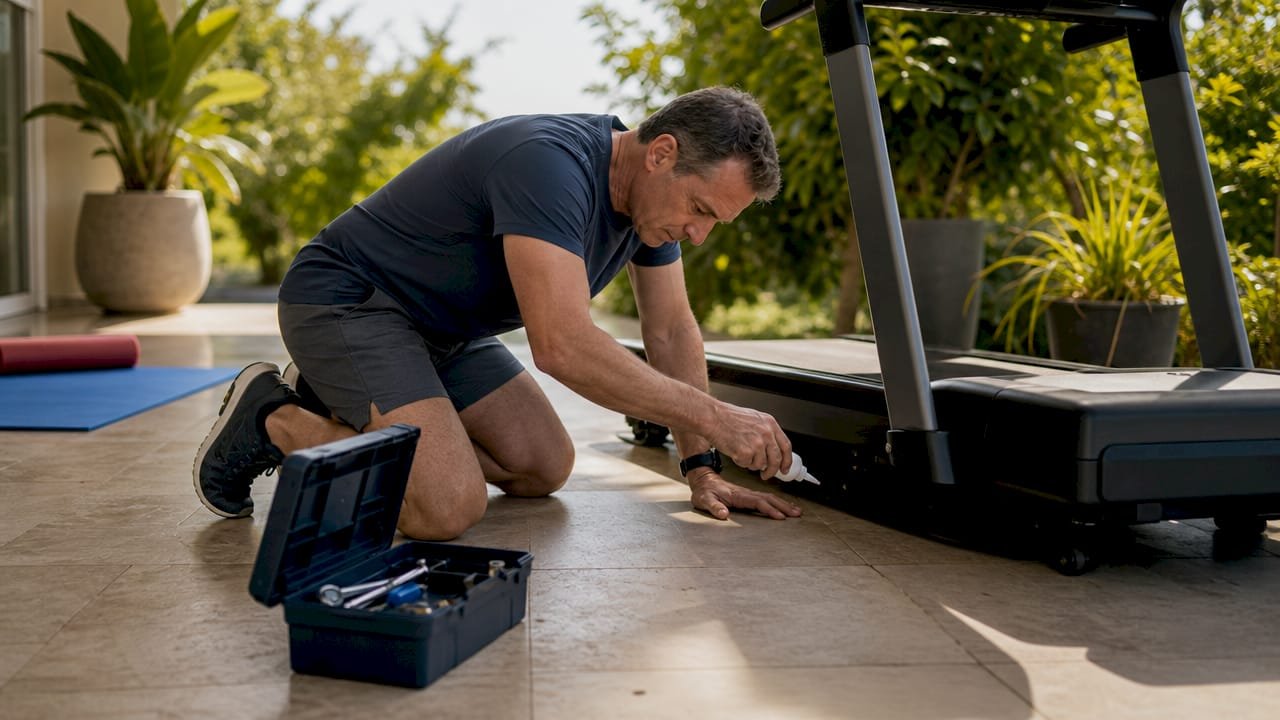
Recurring Treadmill Squeaking Causes and How to Fix Them
Recurring treadmill squeaking causes fall into four main categories: insufficient lubrication, belt misalignment or improper tension, worn rollers and bearings, and loose hardware from vibration. Each of these problems increases friction or mechanical instability, which translates directly into noise. The good news is that most squeaking issues respond to straightforward treadmill maintenance tips that any homeowner can apply without specialized tools. Understanding what is actually happening inside your machine is the fastest path to silence and longer equipment life.
What are the most common recurring treadmill squeaking causes?
Insufficient lubrication between the walking belt and the deck is the single most frequent cause of treadmill noise issues. When the belt drags across a dry deck surface, friction builds with every stride, producing a rhythmic squeak that gets louder over time. Belt misalignment runs a close second, followed by worn roller bearings and loose frame hardware. Recognizing which source is responsible saves you time and prevents the common mistake of replacing parts that are actually fine.
The four causes are not mutually exclusive. A treadmill used three to five times per week without regular maintenance will often develop all four problems simultaneously, compounding the noise and the wear. Addressing them in a logical sequence, starting with lubrication and working through belt checks, rollers, and hardware, gives you the best chance of resolving the squeak in a single maintenance session.
How does lubrication affect treadmill squeaking and maintenance best practices?
Lubrication is the easiest and most effective first step to fix treadmill squeaking, and it resolves the majority of rhythmic noise complaints without any part replacement. The belt and deck create a high-friction contact zone that requires a thin film of lubricant to move smoothly. When that film dries out, the belt begins to drag, and the squeak you hear is the sound of that friction.
Home treadmills used 3 to 5 times per week should be lubricated every three to six months using 100% silicone lubricant. Silicone is the correct choice because it does not degrade rubber, does not attract dust, and stays stable across the temperature range a treadmill motor generates. Petroleum-based lubricants and WD-40 are the wrong tools for this job. They break down rubber over time and can void your warranty.
Application is straightforward. Lift the belt edge, apply silicone lubricant along the center of the deck from the front roller to the rear roller, then walk on the belt at a slow speed for two minutes to distribute it evenly. One important exception: self-lubricating treadmills have internal reservoirs that need refilling rather than direct deck application. Applying standard silicone oil directly to a self-lubricating model can saturate the system and cause damage.
- Check your owner’s manual to confirm whether your model is self-lubricating before applying anything.
- Use only 100% silicone lubricant, not spray-on multi-purpose lubricants.
- Apply lubricant to the underside of the belt, not the top surface.
- Wipe away any excess that migrates to the belt edges to prevent slipping.
Pro Tip: If your treadmill squeaks only during the first five minutes of use and then quiets down, that is a classic sign of a dry deck. The belt warms up and the residual lubricant softens slightly, masking the noise temporarily. Lubricate on schedule rather than waiting for the squeak to return.
What role do belt alignment and tension play in treadmill squeaking?
A misaligned or improperly tensioned belt is the second most common source of treadmill noise issues, and it is also the cause most likely to accelerate wear on other components. Proper belt tension requires lifting the walking belt 2 to 3 inches from the deck surface at the midpoint. Less than two inches means the belt is too tight. More than three inches means it is too loose.
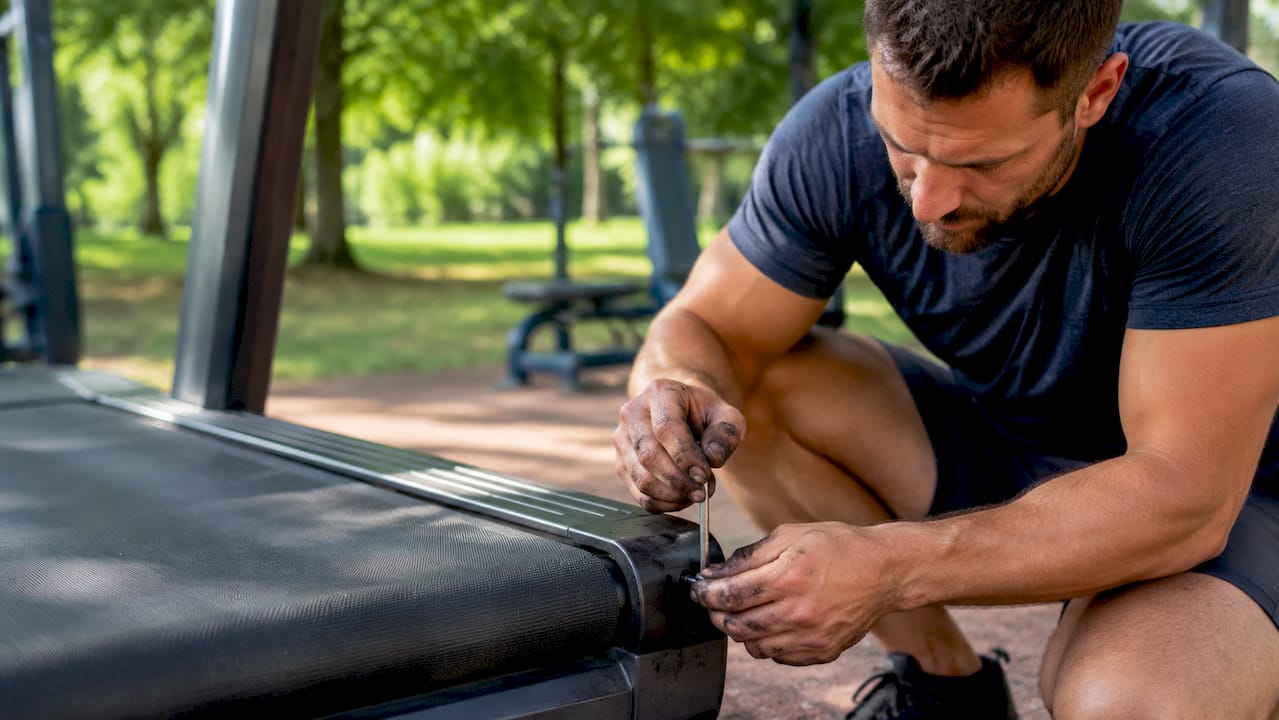
Here is how the two problems differ in practice:
| Belt condition | Symptom | Risk |
|---|---|---|
| Too loose | Slipping underfoot, rhythmic slapping noise | Motor strain, belt edge wear |
| Too tight | High-pitched squeak, stiff feel | Roller bearing damage, motor overload |
| Misaligned | Squeaking on one side, belt drifting | Uneven deck wear, belt fraying |
Adjusting belt tension requires turning the rear roller bolts with an Allen wrench. The critical rule here is to work in small increments. Belt tension adjustments should not exceed a quarter-turn at a time, because over-tightening causes roller bearing damage and increases motor strain. After each quarter-turn, run the treadmill at a moderate speed and recheck the lift test before making another adjustment.
Follow these steps for a safe tension adjustment:
- Unplug the treadmill completely before touching any hardware.
- Locate the rear roller adjustment bolts on both sides of the frame.
- Turn each bolt one quarter-turn clockwise to increase tension.
- Plug in the treadmill and run it at 3 mph for 60 seconds.
- Perform the 2 to 3 inch lift test at the belt midpoint.
- Repeat in quarter-turn increments until tension is correct.
- Check belt tracking: the belt should run centered without drifting left or right.
For alignment issues, adjust only the bolt on the side toward which the belt is drifting. Turn it one quarter-turn clockwise, then retest. Patience here prevents the common mistake of over-correcting and creating a new drift in the opposite direction.
How do worn rollers and bearings contribute to treadmill squeaking?
Rollers are the cylindrical drums at the front and rear of the treadmill that the belt wraps around. Inside each roller sit bearings that allow smooth rotation. When those bearings dry out or wear down, they produce a grinding or squeaking sound that is distinct from belt friction noise. The key difference is that roller bearing noise tends to be constant and present at all speeds, while belt friction noise is often rhythmic and speed-dependent.
Signs that rollers or bearings are the source of your treadmill noise issues include:
- A grinding or chirping sound that does not change after lubrication.
- Noise that is louder at the front or rear of the machine rather than underfoot.
- Visible wobble or lateral play when you spin a roller by hand with the belt removed.
- A rough or gritty feel when rotating the roller manually.
Inspect the rollers by removing the belt and spinning each roller by hand. A healthy roller spins freely and quietly. A worn one will feel rough, catch, or produce an audible scrape. Some roller bearings accept a small amount of bearing grease applied with a needle applicator, which can extend their life. However, bearings that show visible pitting, rust, or flat spots need replacement, not lubrication.
Pro Tip: Rear rollers wear faster than front rollers on most residential treadmills because the rear roller carries more load during the push-off phase of each stride. Check the rear roller first when diagnosing a persistent squeak that lubrication does not resolve.
When bearing replacement is needed, the decision to DIY or call a professional depends on your comfort with disassembly. Roller replacement on most NordicTrack, ProForm, and LifeFitness residential models requires removing the belt, which takes about 30 minutes with basic tools. If the squeak returns within a few weeks of replacing the belt lubricant, worn rollers are the likely culprit, and professional inspection is worth scheduling.
Why do loose bolts and hardware cause treadmill squeaking and how to fix them?
Treadmill vibration is constant and cumulative. Every stride sends mechanical energy through the frame, and over months of use, that energy works bolts and screws loose. Loose screws and bolts from vibration cause squeaking noises that can be resolved by thorough hardware inspection and tightening. The squeak from loose hardware is typically intermittent, appearing at certain speeds or incline levels rather than continuously.
The most common loose hardware locations are the frame bolts connecting the uprights to the base, the motor mount bolts under the motor hood, the incline mechanism linkage bolts, and the console mounting screws. Incline mechanisms and motors can cause squeaking specifically during incline changes, particularly if the gears and linkages lack lubrication.
Follow this hardware inspection sequence:
- Unplug the treadmill and wait 60 seconds before touching any internal components.
- Use a wrench or Allen key to check every visible bolt on the frame, uprights, and base.
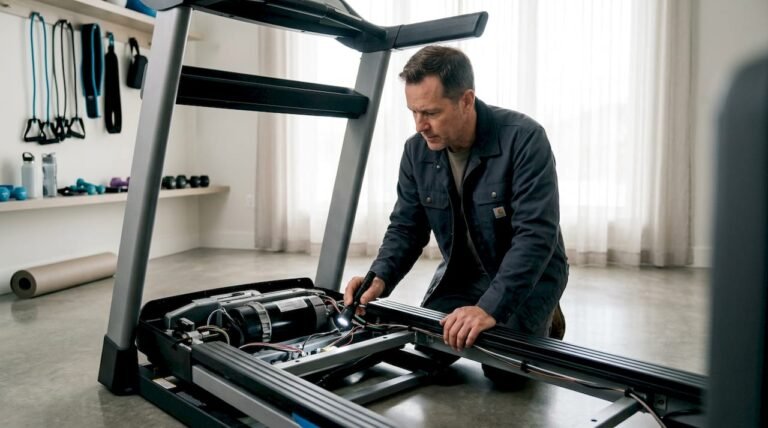
- Remove the motor hood and check the motor mount bolts for looseness.
- Inspect the incline mechanism linkage and apply a small amount of silicone spray to moving joints.
- Check console mounting screws and tighten any that turn freely.
- Reassemble and run the treadmill through a full incline cycle to confirm the noise is gone.
Hardware checks take about 20 minutes and should be part of your regular treadmill maintenance routine every six months. Many owners skip this step entirely, which is why loose hardware squeaks are among the most underdiagnosed common treadmill problems.
How to troubleshoot recurring treadmill squeaking for long-term solutions
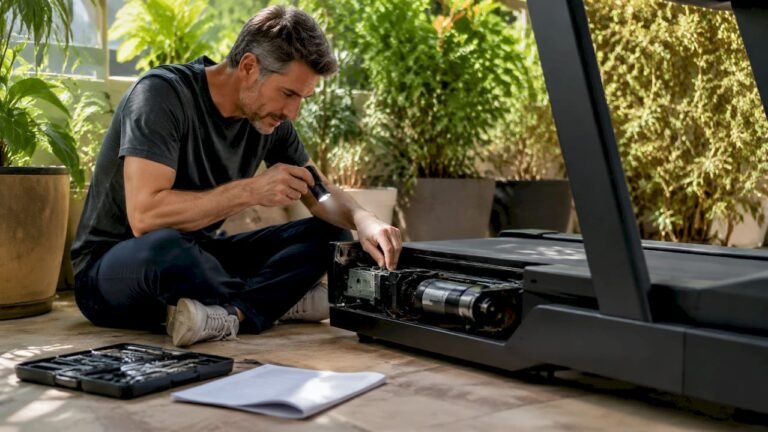
Systematic troubleshooting beats random fixes every time. Many treadmill owners can save money by cleaning motor compartments and lubricating belts before pursuing expensive repairs or part replacements. The sequence below moves from the simplest and most likely fix to the most complex, which keeps your time and cost investment proportional to the actual problem.
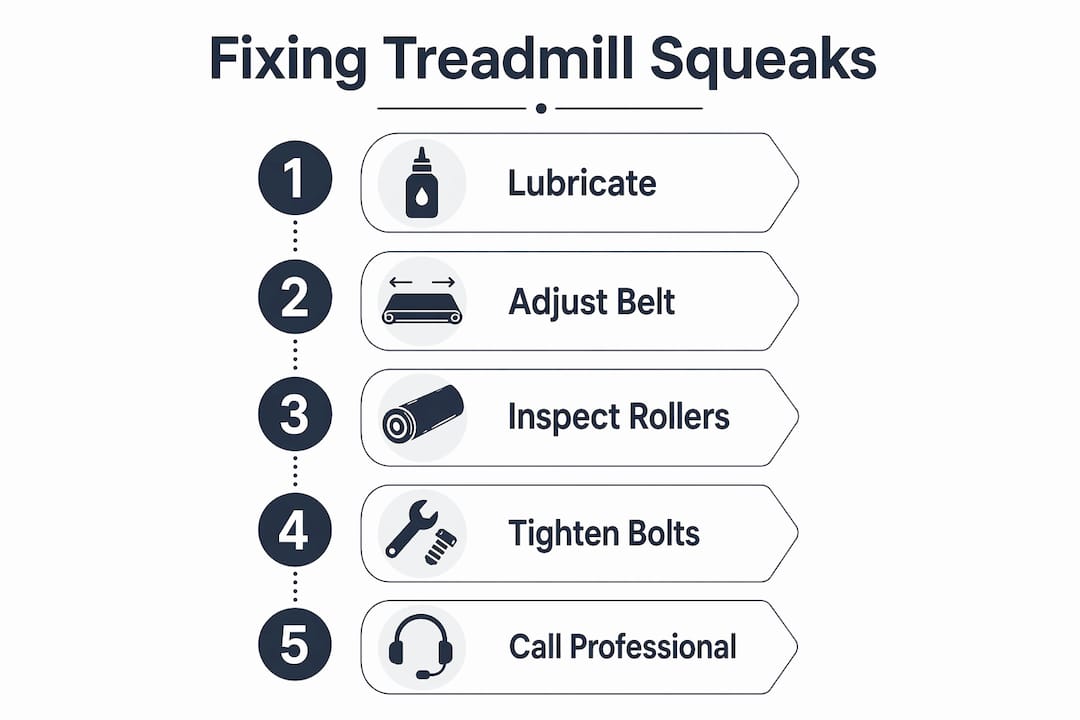
Work through this checklist in order:
- Step 1: Lubricate first. Apply 100% silicone lubricant to the deck and run the belt for two minutes. Wait 24 hours and test.
- Step 2: Check belt tension and alignment. Perform the 2 to 3 inch lift test. Adjust in quarter-turn increments if needed.
- Step 3: Inspect rollers. Remove the belt and spin each roller by hand. Listen and feel for roughness.
- Step 4: Tighten all hardware. Work through the full hardware inspection sequence with the treadmill unplugged.
- Step 5: Check the incline mechanism. Run through incline changes and listen for squeaks specific to that motion.
One safety rule overrides all troubleshooting steps. Stop using the treadmill immediately if you detect a burning smell during use. A burning smell signals serious friction or motor brush wear, and continuing to run the machine risks motor board damage that costs significantly more to repair than the original squeak would have. Motor replacements are a major expense, and they are often avoidable if the warning signs are taken seriously early.
Pro Tip: Keep a simple maintenance log with dates for lubrication, belt checks, and hardware tightening. Treadmills that follow a documented schedule develop fewer recurring noise problems because no single maintenance task gets skipped for too long.
| Squeak type | Most likely cause | First fix |
|---|---|---|
| Rhythmic, speed-dependent | Dry belt or deck | Silicone lubrication |
| Constant grinding | Worn roller bearings | Roller inspection or replacement |
| Intermittent, incline-related | Loose hardware or dry incline linkage | Hardware tightening and silicone spray |
| Side-specific squeak | Belt misalignment | Rear roller bolt adjustment |
Key takeaways
Recurring treadmill squeaking is caused by dry belts, misaligned tension, worn roller bearings, and loose hardware, and each cause has a specific fix that prevents further damage.
| Point | Details |
|---|---|
| Lubrication is the first fix | Apply 100% silicone lubricant every 3 to 6 months to eliminate belt and deck friction noise. |
| Belt tension requires precision | Use the 2 to 3 inch lift test and adjust only in quarter-turn increments to avoid bearing damage. |
| Roller bearings wear silently | Spin each roller by hand to detect roughness before noise becomes a grinding mechanical failure. |
| Hardware loosens over time | Inspect and tighten all frame bolts, motor mounts, and incline linkages every six months. |
| Burning smell means stop immediately | Continuing use after detecting a burning smell risks motor board damage and costly replacement. |
What I’ve learned from years of squeaky treadmills
Most of the treadmills I see with recurring noise problems share one thing in common: the owner waited. They heard the squeak, figured it would go away, and kept running. By the time they called for service, what started as a dry belt had progressed to worn rollers and a stressed motor. The squeak was never the problem. It was the warning.
The other pattern I see constantly is over-correction. Someone reads that belt tension causes squeaking, cranks both rear bolts several full turns, and then wonders why the motor sounds strained and the belt feels like it is running through concrete. Quarter-turn adjustments exist for a reason. The treadmill’s mechanical tolerances are tighter than most people realize.
What actually works is boring but consistent: lubricate on a schedule, check tension twice a year, spin the rollers when you lubricate, and tighten hardware at the same time. That routine, done faithfully, will prevent the vast majority of treadmill hidden damage that turns a $50 maintenance visit into a $300 repair. The treadmills I see that last 10 or more years without major repairs are almost always the ones with owners who treat maintenance as a habit rather than a reaction.
— Steve
When to call a professional for treadmill repair
If you have worked through the full troubleshooting sequence and the squeak persists, or if you hear grinding, smell burning, or see error codes on the console, the problem is beyond standard DIY maintenance.

Texastreadmillrepair serves South Texas homeowners and gym owners with same-week appointments and certified technicians who come directly to your location. No hauling your machine anywhere. Their flat-rate pricing means you know the cost before work begins, and every repair carries a 90-day warranty on parts and labor. Whether you need a full treadmill repair service or want a professional to confirm whether your machine is worth fixing, Texastreadmillrepair provides the diagnosis and the solution in one visit. Check the repair vs. replace guide to know what to expect before you call.
FAQ
Why does my treadmill squeak only at certain speeds?
Speed-dependent squeaking points to belt and deck friction rather than hardware or roller issues. The noise appears at specific speeds because belt tension and contact pressure change as the motor accelerates, making dry spots more pronounced at certain RPMs.
How often should I lubricate my treadmill to prevent squeaking?
Treadmills used three to five times per week need lubrication every three to six months using 100% silicone lubricant. More frequent use shortens that interval, so check the deck surface for dryness every two months if you run daily.
Can I use WD-40 to fix treadmill squeaking?
WD-40 is not a suitable treadmill lubricant. It degrades rubber belts over time and can void your warranty. Use only 100% silicone lubricant, which is specifically formulated to protect belt and deck surfaces without causing material breakdown.
What does it mean if my treadmill squeaks during incline changes?
Squeaking during incline changes typically indicates dry or loose incline mechanism linkages. Applying silicone spray to the incline motor joints and checking the linkage bolts for tightness resolves most incline-specific noise without part replacement.
When should I stop using a squeaky treadmill?
Stop using the treadmill immediately if the squeak is accompanied by a burning smell, visible smoke, or error codes on the console. These signs indicate motor or electrical stress that worsens with continued use and can turn a minor repair into a full motor replacement.