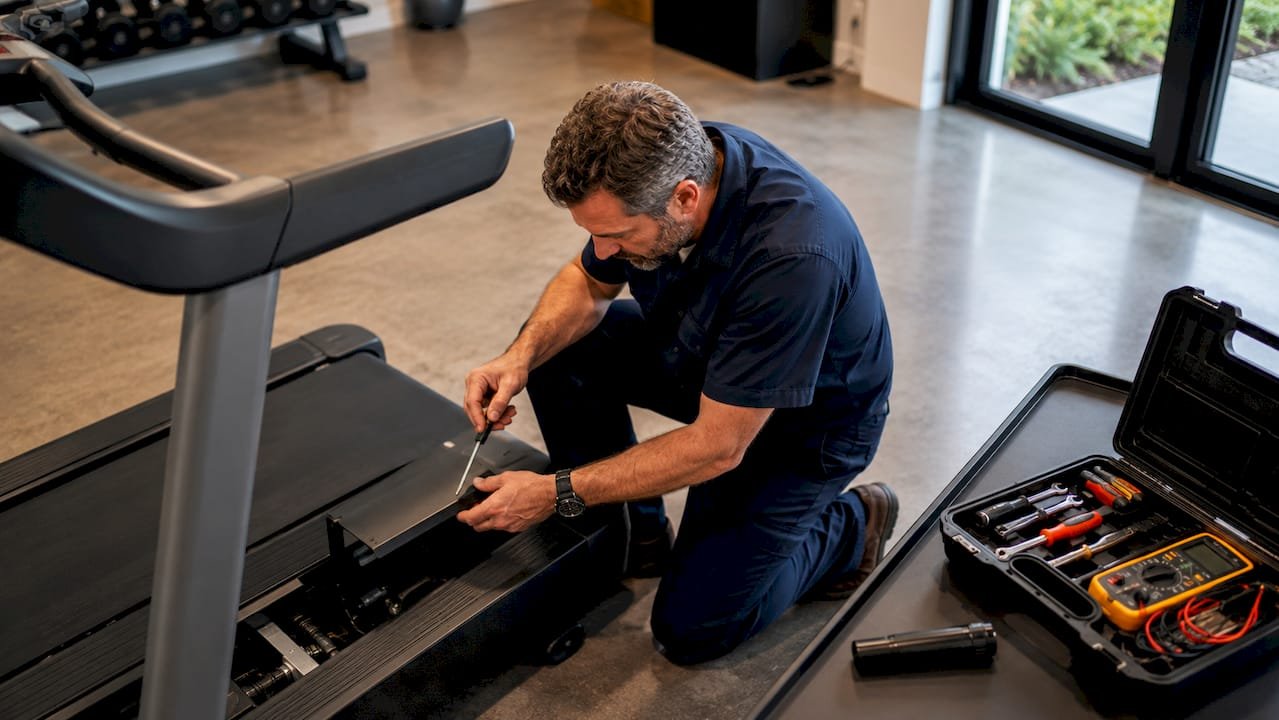
Treadmill Intermittent Shutdown Causes: Fix It Fast
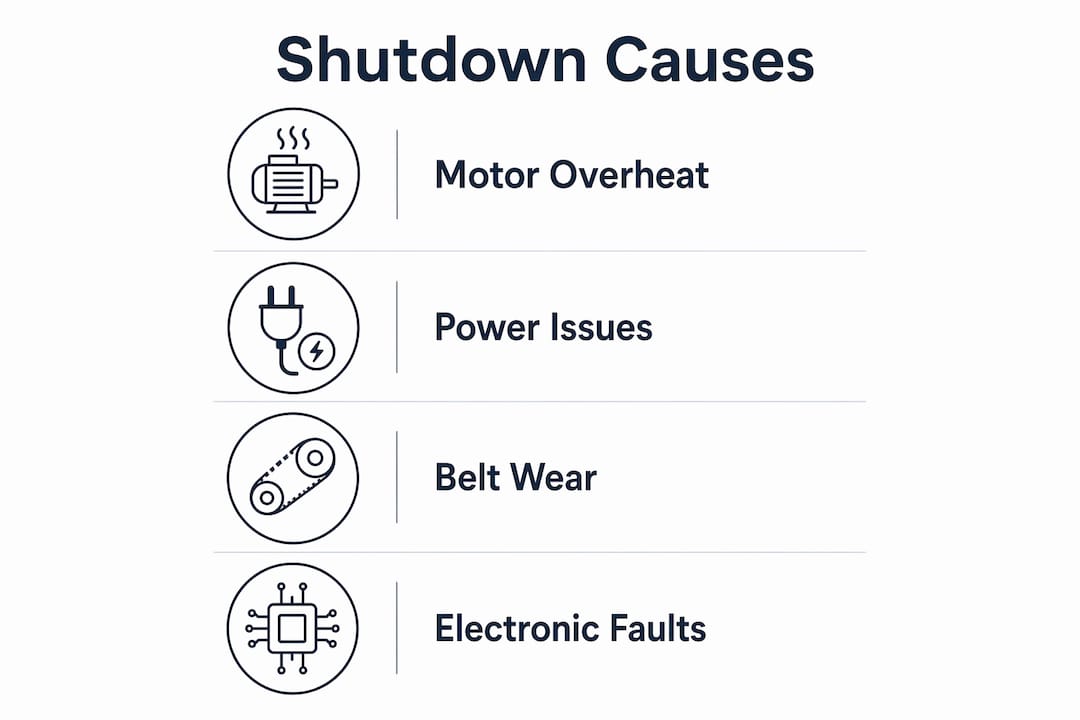
Treadmill intermittent shutdown causes fall into four main categories: motor overheating, unstable power supply, worn mechanical components, and faulty electronic parts. Each one triggers your machine’s built-in safety systems, cutting power without warning. NordicTrack, ICON Health & Fitness, and most major treadmill brands build these protections in by design. The problem is that without knowing which cause is behind your specific shutdown, you can spend weeks chasing the wrong fix. This guide breaks down every major cause with clear, practical steps so you can stop guessing and start solving.
How does motor overheating cause treadmill shutdowns?
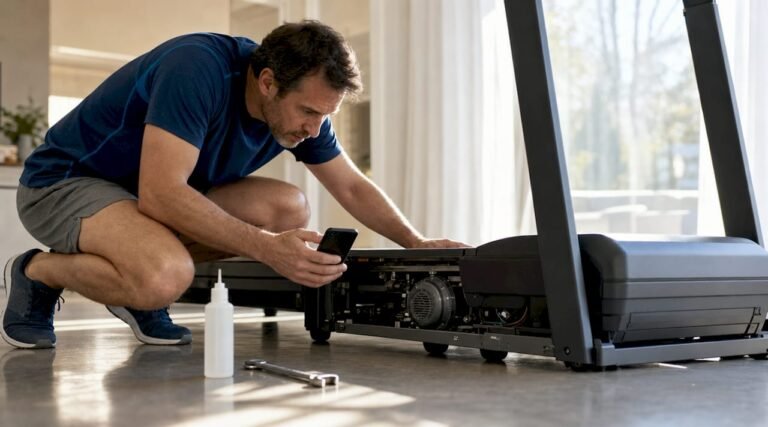
Overheating is the most frequent cause of intermittent treadmill shutdowns. Thermal protection circuits inside the motor trip automatically when internal temperatures exceed safe limits. That trip typically happens within 5–15 minutes of sustained heat buildup. The machine shuts off completely, and no amount of pressing buttons will restart it until the motor cools down.
Most users never see this coming because the heat builds gradually. Dust accumulation inside the motor compartment acts like insulation, trapping heat that would otherwise dissipate. A dry or worn walking belt compounds the problem by creating excessive friction, which forces the motor to work harder and generate even more heat. The result is a motor running far hotter than it was designed to handle.
Here is what typically leads to a thermal shutdown:
- Dust buildup in the motor compartment blocks airflow and traps heat against motor windings.
- Dry or unlubricated belt deck increases friction, raising motor load and temperature simultaneously.
- Worn belt with glazed surface reduces grip and forces the motor to compensate with more torque.
- Blocked ventilation slots on the motor housing prevent passive cooling during operation.
- Continuous high-speed or high-incline sessions push the motor beyond its thermal threshold faster than normal use.
Manufacturers recommend vacuuming the motor compartment at least once or twice per year to prevent dust insulation. Lubricating the deck on the same schedule removes the friction load that accelerates motor strain. Both tasks take under 30 minutes and prevent the majority of thermal shutdowns.
Pro Tip: After a thermal shutdown, unplug the treadmill completely and wait 30–60 minutes before attempting a restart. Forcing a restart while the motor is still hot risks permanent motor damage and can turn a simple cool-down situation into a full motor replacement.
Attempting to override a thermal shutdown does not reset the problem. It degrades motor winding insulation with every forced restart, converting a manageable repair into a complete motor failure.
What role do power supply and electrical issues play in shutdowns?
Power supply problems are the second most common source of treadmill power issues, and they are the most frequently misdiagnosed. Most users assume the treadmill itself is broken when the real culprit is the outlet or the cord running to it. Using household power strips or extension cords causes voltage drops that confuse the treadmill’s control board, triggering what technicians call “ghost shutdowns.” The machine cuts out for no visible reason because the control board loses the stable voltage it needs to operate.
Treadmills draw a significant surge of current at startup. That inrush current can exceed the capacity of a standard power strip in under a second. When the voltage drops during that surge, the control board interprets it as a fault and shuts the machine down as a protective measure. The NordicTrack T6.5 S manual specifically warns against underspecified power strips for exactly this reason.
Here is how to diagnose and address treadmill electrical problems:
- Plug directly into a wall outlet. Remove any power strip, extension cord, or surge protector that is not rated for treadmill use.
- Test the outlet with a lamp or phone charger to confirm it delivers consistent power before assuming the treadmill is at fault.
- Check for a dedicated circuit. Treadmills perform best on a 20-amp dedicated circuit, away from other high-draw appliances.
- Upgrade to a UL 1449 listed surge suppressor rated for at least 450 joules if a direct wall connection is not possible. This protects the control board from voltage spikes that cause intermittent shutdowns.
- Inspect the power cord for fraying, kinks, or loose connections at the treadmill base.
Pro Tip: If your treadmill shuts off only during the first 30 seconds of use, a power supply issue is the most likely cause. That is when inrush current peaks and voltage drops are most severe. Check your treadmill power fluctuation causes before replacing any internal parts.
How do worn belts and motor strain cause shutdowns?
Mechanical wear is a slower, quieter cause of treadmill failure, but it is just as destructive as an electrical fault. A walking belt that is too loose, too tight, or glazed from age forces the motor to work against resistance it was never designed to handle. That extra load raises motor temperature and current draw simultaneously. The machine’s safety systems detect the overload and shut it down.
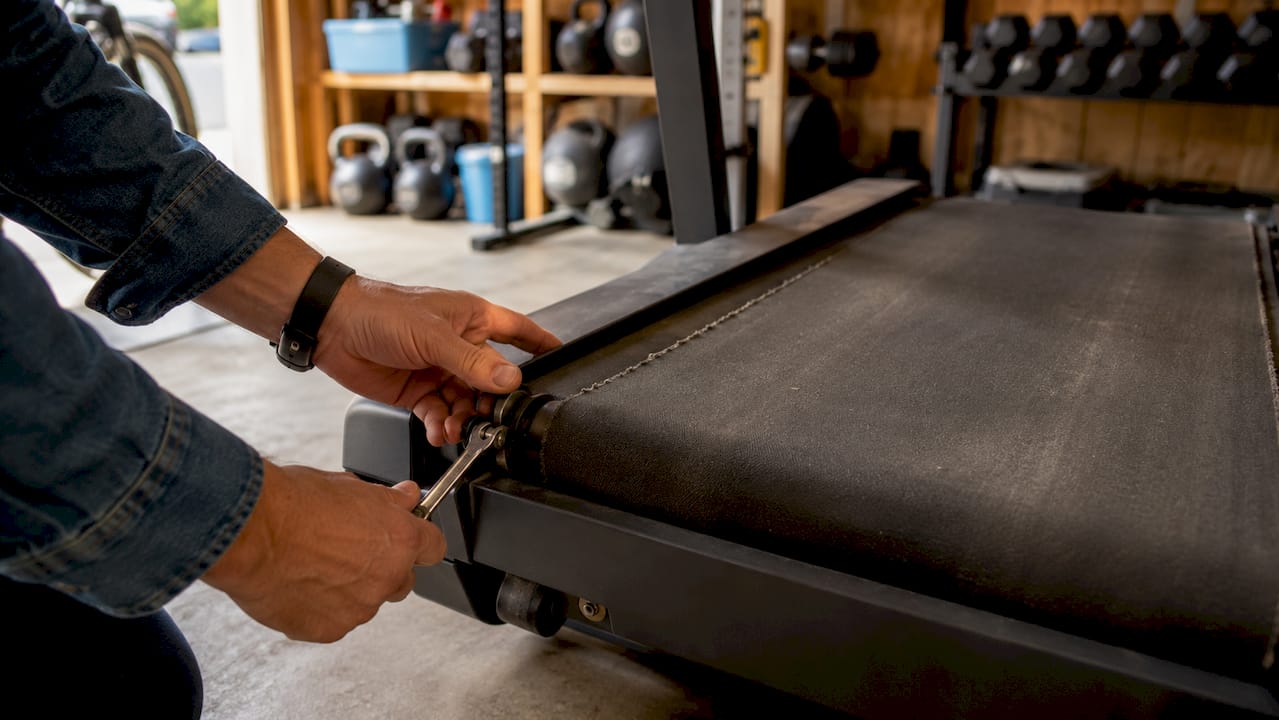
The critical insight most users miss is this: replacing the motor without fixing the underlying belt friction leads to repeated failures. The new motor faces the same mechanical resistance as the old one and fails for the same reason. Belt condition is the root cause. The motor is just the first casualty.
| Belt condition | Effect on motor | Shutdown risk |
|---|---|---|
| Properly tensioned and lubricated | Normal load, stable temperature | Low |
| Too loose (slipping) | Motor spins faster to compensate | Moderate |
| Too tight (over-tensioned) | Constant drag increases current draw | High |
| Glazed or worn surface | Reduced grip forces higher torque output | High |
| Frayed edges or delaminating | Unpredictable friction spikes | Very high |
Signs your belt needs attention include visible fraying along the edges, a shiny or discolored surface on the underside, a dragging sensation when you walk, or a burning smell during use. Any one of these signals that the belt is adding strain to the motor.
Pro Tip: Lift the edge of your walking belt and slide your hand underneath. The deck surface should feel smooth and slightly slick from lubrication. If it feels dry, rough, or sticky, lubricate the deck immediately. Skipping this step is the single most common reason treadmill motors fail early. See the full treadmill overheating reasons list for related maintenance steps.
What electronic or component faults cause treadmill shutdowns?
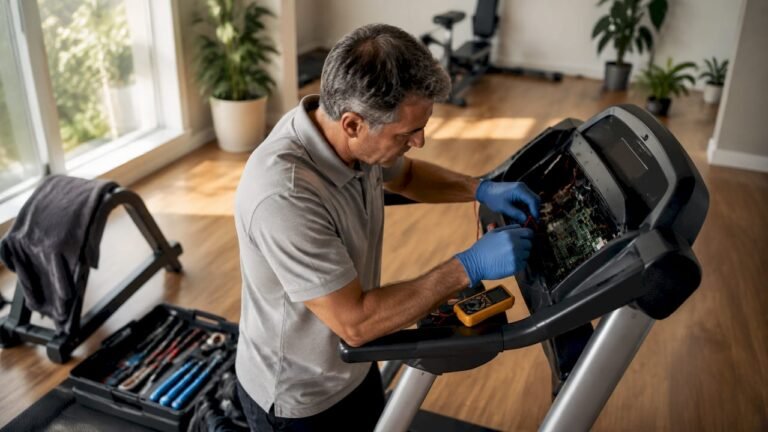
Electronic faults are the hardest category to diagnose without tools, but they follow recognizable patterns. Faulty speed sensors, incline motor jams, and console wiring issues all trigger intermittent shutdowns by sending erroneous signals to the motor control board. The board reads those signals as a safety fault and cuts power. The machine may display an error code, or it may simply go dark with no explanation.
A reed switch is the small magnetic sensor that tracks belt speed. When it fails or drifts out of alignment, the control board receives speed readings that do not match the motor’s actual output. The board interprets this as a runaway motor condition and shuts the machine down. This type of fault often produces erratic shutdowns at random speeds rather than after a consistent warm-up period.
Common electronic fault patterns and their indicators:
- Speed sensor or reed switch failure: Treadmill shuts off at random speeds, sometimes immediately after starting. May show an error code on the console. Check treadmill error codes to identify the specific fault.
- Incline motor jam or calibration error: Machine shuts down when incline is adjusted or at a specific incline angle. The incline motor draws excess current when jammed, triggering a safety cutoff.
- Console relay or wiring harness fault: Intermittent power loss that appears random. The machine may restart immediately or require a full reset. Visual inspection often reveals a loose connector or a wire with cracked insulation.
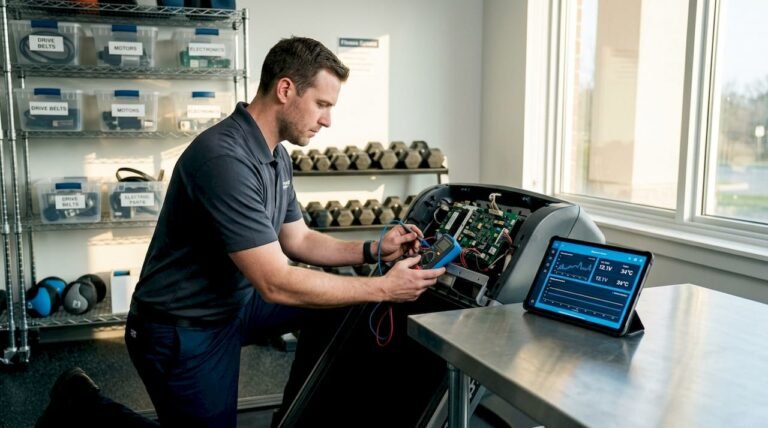
- Motor control board failure: Power board faults manifest as sudden shutdowns with no error code. Continuity testing across the board’s input and output terminals is the standard diagnostic step.
| Component | Failure symptom | DIY diagnosis |
|---|---|---|
| Reed switch / speed sensor | Random shutdowns at any speed | Inspect magnet alignment on flywheel |
| Incline motor | Shutdown when incline changes | Listen for grinding or stalling sound |
| Wiring harness | Intermittent power loss | Check connectors for looseness or corrosion |
| Motor control board | Sudden shutdown, no error code | Continuity test across board terminals |
Electronic faults that involve the motor control board or wiring harness are best handled by a certified technician. Misdiagnosing a board fault and replacing the wrong component is an expensive mistake.
Key takeaways
Treadmill intermittent shutdowns trace back to four root causes: motor overheating, power supply instability, belt and mechanical wear, and electronic component faults.
| Point | Details |
|---|---|
| Overheating is the top cause | Thermal circuits trip within 5–15 minutes; clean the motor compartment and lubricate the belt yearly. |
| Power strips cause ghost shutdowns | Plug directly into a wall outlet or use a UL 1449 surge suppressor rated for 450 joules. |
| Belt condition drives motor strain | A worn or dry belt forces the motor to overwork; fix the belt before replacing the motor. |
| Electronic faults need proper diagnosis | Reed switch, incline motor, and wiring harness faults each produce distinct shutdown patterns. |
| Forced restarts cause lasting damage | Always unplug and wait 30–60 minutes after a thermal shutdown before restarting. |
What I’ve learned after years of treadmill shutdowns
Most treadmill owners treat a shutdown as a machine problem. After years of working on these machines, I see it differently. A shutdown is almost always the machine doing exactly what it was designed to do. The safety system worked. The question is why it had to.
The pattern I see most often is a treadmill that shuts down after 10–15 minutes of use. The owner assumes it is a motor fault, orders a replacement motor, installs it, and calls me three months later with the same problem. The belt was dry and glazed the whole time. The new motor failed for the same reason as the old one. That is an expensive lesson that a $15 bottle of treadmill lubricant would have prevented.
The second pattern is power-related shutdowns that get blamed on the console or the control board. Someone plugs their NordicTrack into a power strip shared with a space heater and a TV, and then wonders why the machine cuts out during their morning run. A direct wall connection solves it in 30 seconds. I have seen people spend $200 on a new control board for a problem that cost nothing to fix.
The one thing I tell every client: listen to your treadmill before it shuts down. A faint burning smell, a slight hesitation at startup, or a dragging sensation underfoot are all early warnings. None of those symptoms appear without a reason. Catching them early means a $30 maintenance fix instead of a $400 repair. Do not wait for the shutdown to take the machine seriously.
— Steve
When to call in a professional for treadmill repairs
If you have worked through the overheating, power, belt, and electronic checks above and your treadmill is still shutting off, the problem is deeper than a DIY fix can reach. Persistent shutdowns after basic maintenance point to motor control board failure, wiring harness damage, or a component fault that requires proper diagnostic tools to isolate.

Texastreadmillrepair sends certified technicians directly to your home or gym in South Texas, with same-week appointments and flat-rate pricing so you know the cost before any work begins. Every repair comes with a 90-day warranty on parts and labor. If you are unsure whether your machine is worth repairing, the owner’s repair guide walks you through the signs that separate a fixable treadmill from one that has reached the end of its useful life. For immediate service, visit the Texastreadmillrepair services page to book a diagnostic appointment.
FAQ
Why does my treadmill stop after 10–15 minutes?
A shutdown after 10–15 minutes of use is the classic sign of a thermal overload. The motor overheats due to dust buildup, a dry belt deck, or insufficient ventilation, and the thermal protection circuit cuts power automatically.
Can a power strip cause my treadmill to shut off?
Yes. Standard household power strips cause voltage drops during the treadmill’s startup current surge, which the control board reads as a fault. Plug directly into a wall outlet or use a UL 1449 rated surge suppressor rated for at least 450 joules.
How long should I wait before restarting after a shutdown?
Unplug the treadmill and wait 30–60 minutes before attempting a restart after a thermal shutdown. Restarting too soon risks permanent damage to the motor windings and the control board.
What are the signs that my treadmill belt is causing shutdowns?
A glazed or discolored underside, fraying edges, a dragging sensation while walking, or a burning smell during use all indicate a belt that is adding excessive friction and motor strain. Lubricate or replace the belt before running the machine again.
When should I stop troubleshooting and call a technician?
Call a technician when shutdowns continue after you have cleaned the motor compartment, lubricated the belt, confirmed a stable power source, and checked for visible wiring faults. Persistent shutdowns at that point indicate a motor control board or internal component failure that requires professional diagnostic tools.