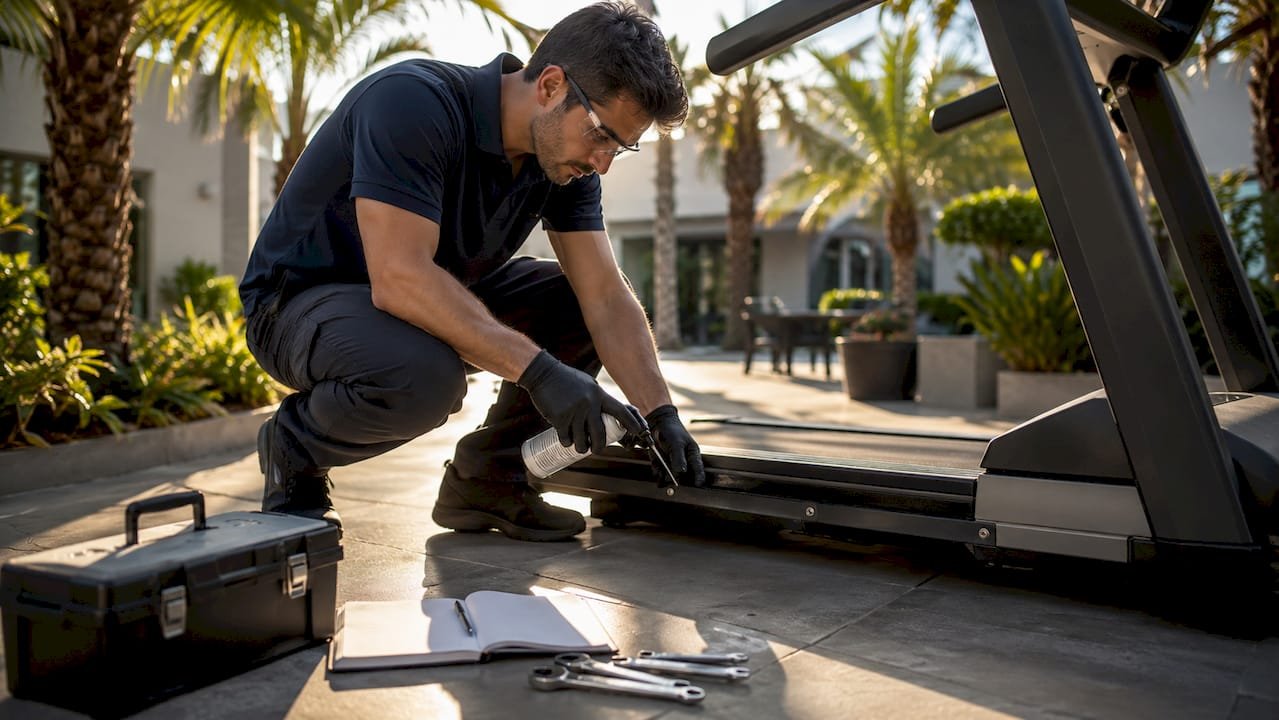
Commercial Treadmill Failures: Gym Owner’s 2026 Guide
Commercial treadmill failures fall into three primary categories: drive belt and deck surface wear, console electronics breakdown, and motor component failure. Each category follows a predictable timeline, which means gym managers who understand the types of commercial treadmill failures can schedule repairs before equipment goes down during peak hours. Brands like Life Fitness, Precor, and NordicTrack all follow similar failure patterns regardless of price point. The difference between a $500 repair and a $3,000 replacement almost always comes down to how early you catch the warning signs.
1. drive belt and deck failures: the most common breakdown
Drive belt and deck issues are the most frequent commercial treadmill failure point, with a typical service life of 8,000–12,000 miles or roughly 2–4 years. That lifespan shortens fast in a busy gym where multiple users run at high speeds daily. When the belt wears unevenly or the deck surface loses its coating, friction increases across the entire drivetrain.
The most common symptoms you will notice include:
- Belt slipping under load, especially when a heavier user accelerates
- Jerky movement at low speeds, which signals a dry or misaligned belt
- Visible fraying on the belt edges or a glazed, shiny deck surface
- Burning smell during use, caused by excessive friction heat
Insufficient lubrication accelerates wear and causes jerky movement, increased motor heating, and premature failure. Lubrication is not optional maintenance. It is the single most effective action you can take to extend belt and deck life in a high-traffic facility.
Pro Tip: Lubricate the running deck every 4–6 weeks based on facility usage. High-volume gyms with 10 or more daily users per machine should lean toward the 4-week interval. Use only silicone-based lubricant specified by the manufacturer.
Belt tension is equally critical. Proper belt tension adjustment prevents failure progression. Too tight increases motor amperage and heat. Too loose causes slipping and uneven wear. Both conditions accelerate the failure timeline significantly.

2. console electronics failures: costly and unpredictable
Console electronics typically fail after 3–5 years due to sweat ingress and the high cost of proprietary replacement parts. Sweat is corrosive. It works into touchpad membranes, corrodes circuit board contacts, and degrades display connectors over time. The failure is slow until it is sudden.
Common console failure symptoms include:
- Flickering or blank displays that reset mid-workout
- Unresponsive touchpads that require multiple presses or stop registering entirely
- Incline motor errors where the grade does not match the selected setting
- Speed sensor faults that cause the belt to run at the wrong speed or throw error codes
Simpler LED consoles cost less to repair than touchscreen assemblies. That cost gap matters when you are managing a fleet of 20 or more machines. A touchscreen console replacement on a commercial Precor or Life Fitness unit can run several hundred dollars in parts alone, before labor. Electronic component repairs are the most expensive treadmill repairs due to proprietary parts and diagnostics labor.
Understanding treadmill error codes is the fastest way to diagnose console issues before calling a technician. Many error codes point directly to the failing component, saving diagnostic time and cost.
3. motor component failures: the expensive consequence of neglect
Motor failures are driven by operating conditions and neglected preventive maintenance. Dust accumulation in motor compartments traps heat, raises motor temperature, and leads to insulation degradation. Once insulation breaks down, the motor fails. That failure rarely happens in isolation. It is almost always the downstream result of ignored belt wear or poor ventilation.
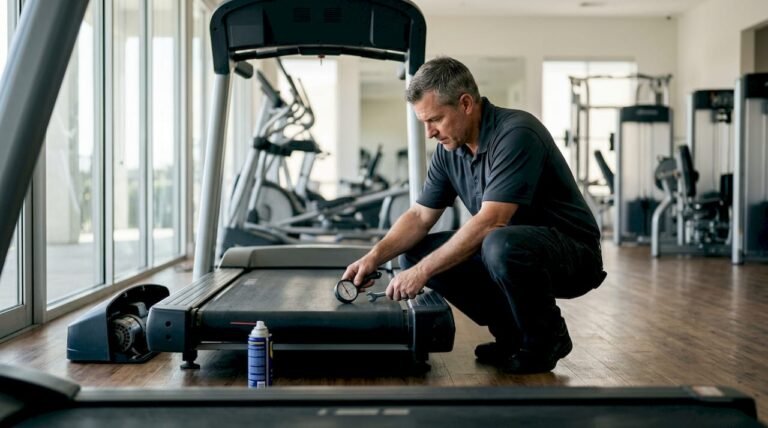
The clearest early warning sign is amperage. A treadmill drawing approximately 18% more motor current than its rated specifications indicates belt or deck wear causing excess heat and imminent motor failure. A clamp meter test takes less than five minutes and gives you quantifiable evidence before anything burns out.
Pro Tip: Test motor amperage quarterly on high-use machines. If the reading exceeds the manufacturer’s rated amperage by more than 15%, schedule a belt and deck inspection immediately. Do not wait for the motor to fail.
Additional conditions that accelerate motor failure include:
- Overloading machines beyond their rated user weight
- Poor ventilation around the motor compartment (maintain at least 6 inches of clearance on all sides)
- Worn motor brushes that go unserviced past the 24–36 month mark
- Belt tension set too tight, which forces the motor to work harder on every stride
Routine cleaning and early symptom detection can prevent motor failures from escalating into full replacements. Cleaning the motor compartment every 90 days with compressed air removes the debris that causes heat buildup. This one step alone extends motor life by months in a dusty gym environment.
4. urgent treadmill failure types that create safety hazards
Some commercial treadmill issues cross from maintenance problems into safety emergencies. Belt snapping, sudden stops, and erratic belt movement are urgent failures that pose fall and injury risks. A snapping drive belt causes sudden deceleration that can throw a user off the machine without warning.
The numbers behind these risks are serious. Safety incidents from treadmill failures include at least 66 falls and 573 thermal incidents reported across certain treadmill models. Thermal incidents include overheating events and fires caused by electrical component failure.
The following failure types require immediate power-off and an out-of-service tag:
- Burning smell or visible smoke from the motor compartment
- Sparks from the console or drive area
- Belt that locks up suddenly or accelerates without user input
- Any error code related to motor control failure or speed sensor loss
Never allow a user to continue on a treadmill showing thermal or electrical failure symptoms. Power off, unplug, and contact a certified technician before the machine goes back into service.
Treadmill overheating is one of the most underreported urgent failure types in commercial gyms. Many operators mistake early overheating signs for normal operation until the machine shuts down completely or triggers a fire risk.
5. preventive maintenance scheduling by failure timeline
Maintenance scheduling tied to lifecycle stages helps gym managers optimize inspection and repair timing. Each failure category follows a predictable window. Aligning your service calendar to those windows keeps repair costs predictable and prevents emergency downtime.
Here is how the failure timeline maps to maintenance actions:
| Lifecycle Stage | Failure Risk | Recommended Action |
|---|---|---|
| 0–12 months | Belt tracking and alignment issues | Monthly belt inspection and lubrication |
| 12–24 months | Deck surface wear | Deck inspection, consider replacement |
| 24–36 months | Motor brush wear | Motor brush inspection and replacement |
| 36–60 months | Console electronics degradation | Full electronics diagnostic and cleaning |
| 60+ months | Full drivetrain and motor failure | Evaluate repair vs. replacement |
Preventive maintenance tips aligned to these windows reduce unplanned downtime and extend equipment life well past the average replacement cycle. Gyms that track failure rates by lifecycle stage allocate maintenance resources more effectively and justify the cost of service contracts to ownership.
A multi-treadmill service contract is worth evaluating once your facility runs five or more machines. Flat-rate contracts eliminate surprise repair costs and keep certified technicians on a regular schedule without requiring you to track every machine manually.
Pro Tip: Use equipment tracking software to log each machine’s usage hours, lubrication dates, and repair history. This data tells you exactly when a machine is entering its next failure window.
Key takeaways
Preventing commercial treadmill failures requires lifecycle-based maintenance, early symptom detection, and immediate action on safety-critical breakdowns.
| Point | Details |
|---|---|
| Belt and deck wear comes first | Service the drive belt and deck every 4–6 weeks with silicone lubricant to prevent the most common failure. |
| Console failures are the costliest | Electronics degrade after 3–5 years; LED consoles cost less to repair than touchscreen assemblies. |
| Amperage testing catches motor failure early | A reading 15% above rated specs signals imminent motor failure before any visible damage occurs. |
| Urgent failures require immediate shutdown | Burning smells, sparks, and sudden belt stops are safety emergencies, not maintenance items. |
| Lifecycle scheduling prevents surprises | Align inspections to the 0–12, 12–24, 24–36, and 36–60 month failure windows to control repair costs. |
What 10 years of treadmill repairs taught me about gym operators
Most gym owners I talk to treat treadmill maintenance as reactive. Something breaks, they call someone. That mindset costs them two to three times more per machine over a five-year period than operators who run a scheduled program.
The biggest misconception I see is that belt lubrication is optional or only needed when something feels wrong. By the time a belt feels wrong, the deck is already scored and the motor is already running hot. You are not preventing a failure at that point. You are managing one.
The second mistake is ignoring belt tension. Operators often tighten a slipping belt without measuring amperage first. A belt that slips because it is worn needs replacement, not more tension. Adding tension to a worn belt pushes motor current above safe levels and accelerates the exact failure you were trying to avoid.
My honest recommendation: treat your treadmills like vehicles. You would not skip an oil change because the car is still running. The same logic applies here. Schedule lubrication, test amperage quarterly, and pull machines from service the moment you smell burning. The cost of a certified technician visit is a fraction of a motor replacement.
— Steve
Keep your treadmills running with expert commercial repair
If your facility is dealing with slipping belts, console errors, or machines that shut down mid-session, Texastreadmillrepair provides same-week appointments with certified technicians who come directly to your gym. No transportation, no guesswork, and no surprise fees with flat-rate pricing.

Texastreadmillrepair covers motor repairs, belt and deck replacements, and full console diagnostics across South Texas. Every repair includes a 90-day warranty on parts and labor. Whether you need a single urgent fix or a maintenance plan for your full fleet, the team at Texastreadmillrepair can assess your machines and give you a clear repair vs. replacement recommendation. Explore commercial treadmill repair services or check the repairable vs. unrepairable signs guide before your next breakdown becomes a liability.
FAQ
What are the most common commercial treadmill failures?
Drive belt and deck surface wear is the most common commercial treadmill failure, typically occurring within 2–4 years or 8,000–12,000 miles of use. Console electronics and motor component failures follow, usually appearing between years 3 and 5.
How often should commercial treadmills be lubricated?
Lubricate the running deck every 4–6 weeks depending on facility usage volume. High-traffic gyms with 10 or more daily users per machine should use the shorter interval and apply only manufacturer-specified silicone lubricant.
When is a treadmill failure considered a safety emergency?
A treadmill failure becomes a safety emergency when you detect a burning smell, sparks, sudden belt lock-up, or uncontrolled speed changes. Power off the machine immediately, tag it out of service, and contact a certified technician before allowing any further use.
How do i know if my treadmill motor is about to fail?
A motor drawing 15–18% more current than its rated amperage is a reliable early indicator of imminent failure. Use a clamp meter to test amperage quarterly and compare the reading against the manufacturer’s specifications listed on the motor housing.
Does belt tension affect motor life?
Yes. Belt tension set too tight forces the motor to draw excess current on every stride, accelerating heat buildup and insulation wear. Tension calibration is a task for a certified technician who can measure amperage while adjusting to confirm the correct load.