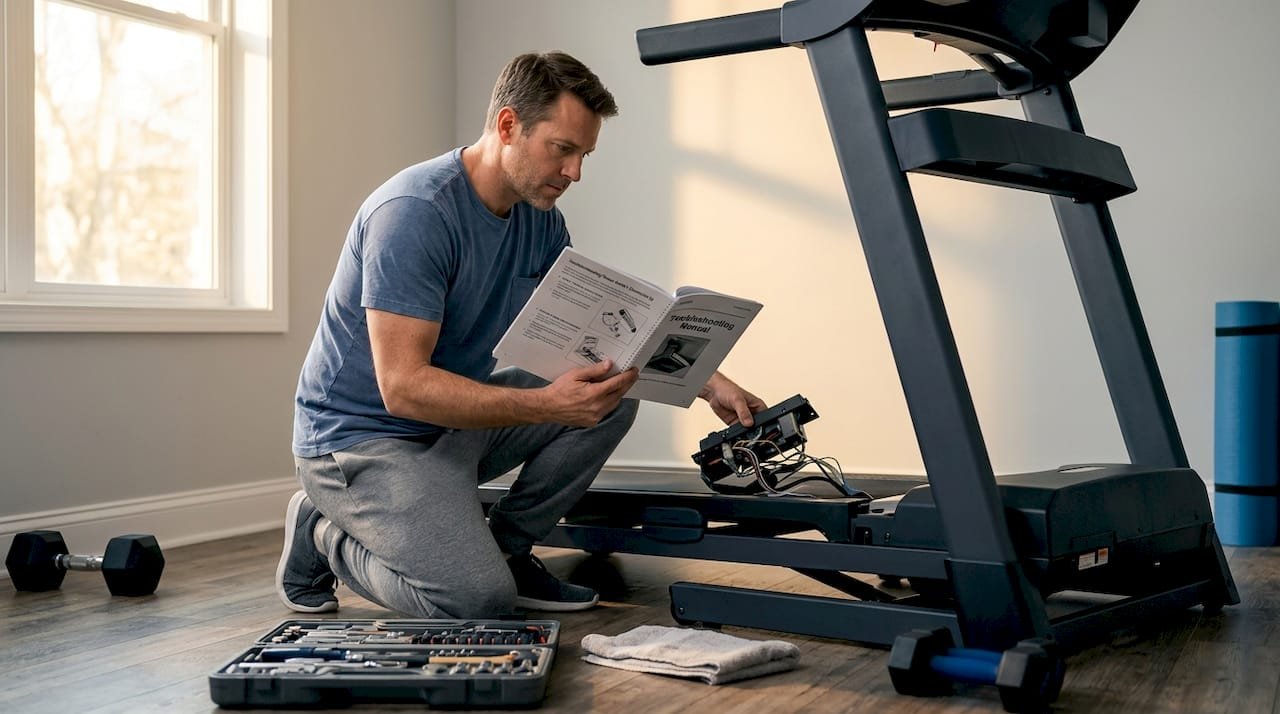
Why Treadmill Repairs Fail Quickly: Stop the Cycle
You replaced the belt. Then the motor control board. Then the belt again. Sound familiar? Understanding why treadmill repairs fail quickly, what repair technicians call “symptom-driven repair failure,” is the first step toward actually solving the problem. Most recurring breakdowns aren’t bad luck or cheap parts. They’re the predictable result of fixing what you can see while ignoring what caused it. This article breaks down the real reasons your treadmill keeps breaking down, what you can do about it, and how to stop pouring money into repairs that don’t last.
Table of Contents
- Key Takeaways
- Why treadmill repairs fail quickly: the root cause problem
- Lubrication and belt maintenance: the most overlooked repair failure cause
- Electrical vulnerabilities that cause control system failures to recur
- Belt tension, alignment, and safety cutouts
- Maintenance practices that break the repair cycle
- My take on the real frustration behind repeat repairs
- Stop paying for repairs that don’t stick
- FAQ
Key Takeaways
| Point | Details |
|---|---|
| Root cause matters most | Replacing parts without diagnosing the underlying problem leads to repeated, costly breakdowns. |
| Lubrication is non-negotiable | Skipping regular belt lubrication accelerates friction, heat, and motor wear faster than almost anything else. |
| Power quality damages electronics | Voltage surges silently destroy control boards, causing failures that look mechanical but aren’t. |
| Belt tension affects everything | Over-tightening or misaligning the walking belt stresses bearings and motors, creating brand-new failures after a repair. |
| Maintenance prevents repair cycles | Scheduled inspections and proper care stop minor issues from compounding into expensive, recurring problems. |
Why treadmill repairs fail quickly: the root cause problem
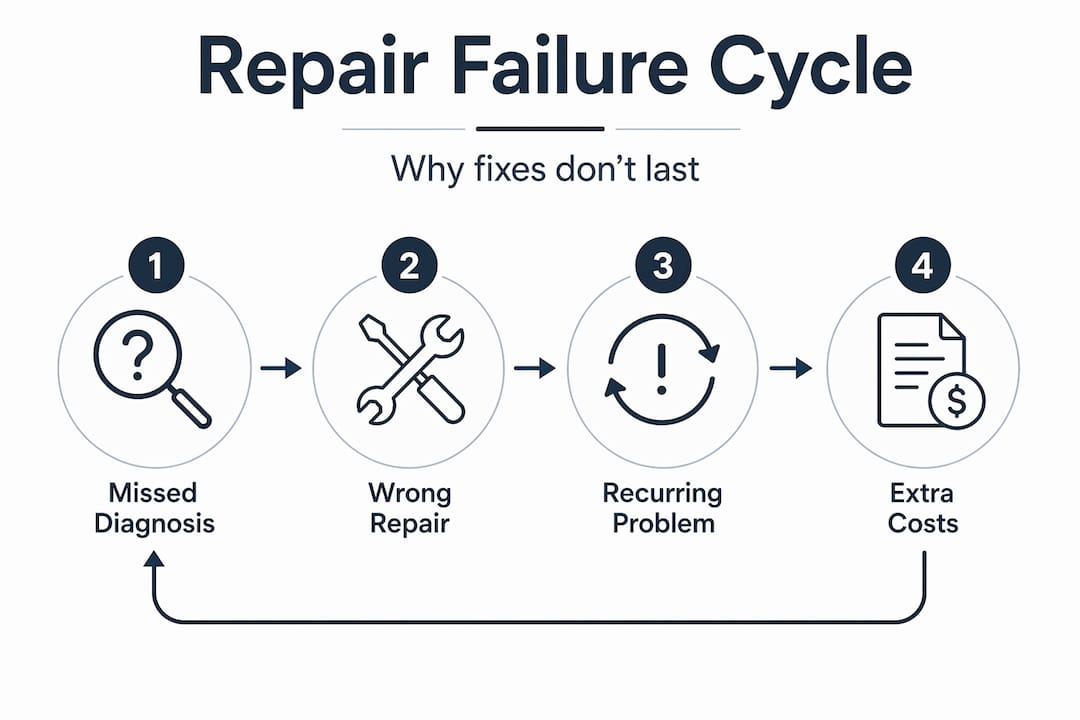
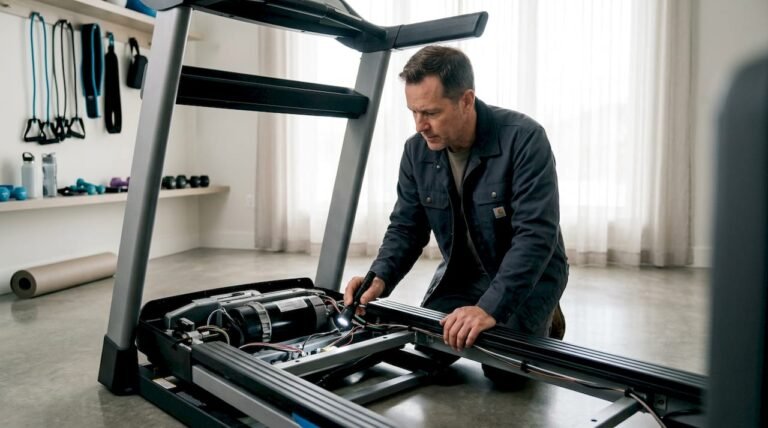
The single biggest reason repairs don’t hold is also the most preventable one. Replacing parts without identifying the actual root cause leads directly to repeated treadmill breakdowns. A technician replaces the motor control board, the machine runs for three weeks, and then it shuts down again. The board wasn’t the problem. The worn walking belt causing excessive friction was, and it destroyed the new board just like it destroyed the old one.
This is the core trap of symptom-driven repair, and it plays out constantly with common treadmill problems. Here’s how it typically unfolds:
- A worn walking belt creates high friction and electrical resistance on the motor
- The motor draws excess current to compensate, which overheats the control board
- The board fails, and the symptom looks purely electrical
- The board gets replaced without addressing the belt
- The new board fails within weeks for the same reason
Electrical or mechanical causes must be properly diagnosed to avoid repeated repair failures, because symptoms like erratic speeds or sudden stopping can come from either system. When a technician or owner skips the diagnostic step, they’re essentially guessing. And guessing costs money.
Pro Tip: Before any part gets replaced, ask your technician to walk you through the diagnosis. If they can’t explain what caused the failed part to fail in the first place, the repair probably won’t last.
The interconnectedness of treadmill systems is what makes misdiagnosis so expensive. Mechanical problems create electrical symptoms. Electrical problems create mechanical symptoms. Treating them in isolation is how repair costs quietly double and triple over time.
Lubrication and belt maintenance: the most overlooked repair failure cause
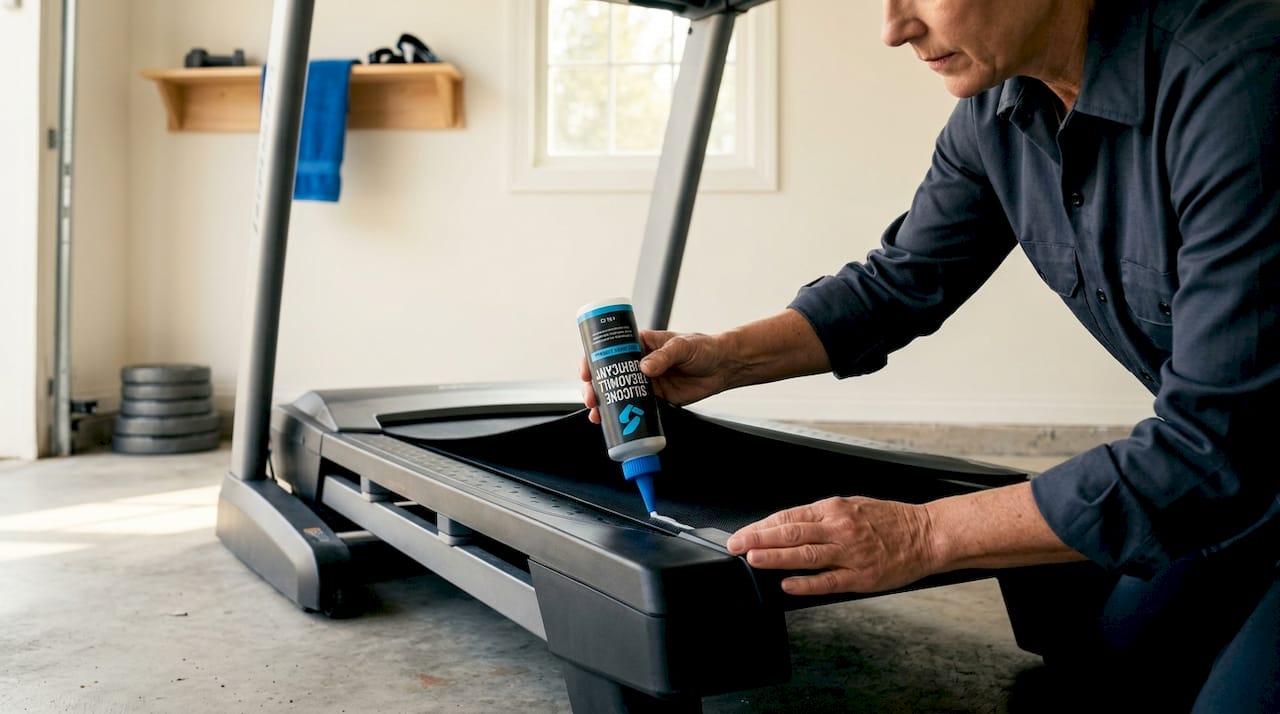
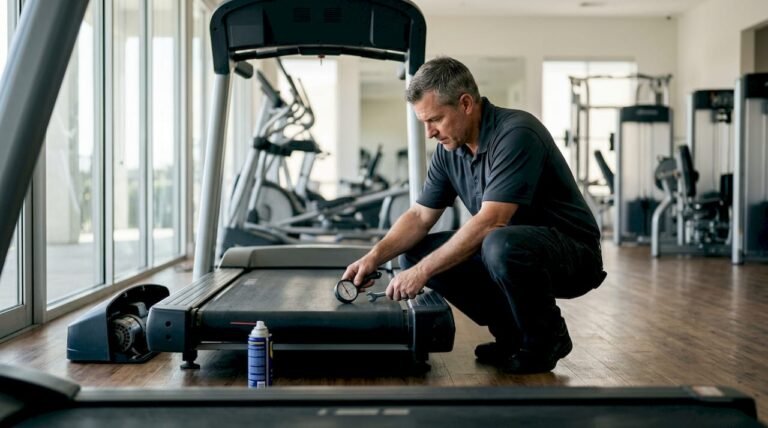
If there’s one maintenance failure that creates more repeat repair visits than anything else, it’s insufficient lubrication. Lubrication every 4 to 6 weeks for average use prevents belt, deck, and motor wear that directly causes repair failures. Skip this, and you’re not just shortening your belt’s life. You’re shortening the life of nearly every component above it.
Here’s what actually happens when lubrication is neglected:
- Friction between the belt and deck increases dramatically
- Heat builds up in the deck surface, degrading the belt material from the inside out
- The motor works harder to maintain speed, drawing more current than it’s designed to handle
- Bearings in the front and rear rollers wear faster under the added strain
- The motor controller overheats and fails prematurely
Some treadmills try to protect owners from this cycle. Firmware lubrication alerts on certain models prevent machine operation until maintenance is completed. Many owners see this as a malfunction and either call for a repair or bypass the prompt entirely. The treadmill isn’t broken. It’s warning you that ignoring lubrication will break it.
Knowing when your deck needs attention matters as much as knowing how to lubricate it. Watch for these signs before your next scheduled service:
- Belt feels sluggish or slower than usual at the same speed setting
- Unusual squeaking or grinding sounds during operation
- The motor sounds louder or strained without an increase in speed or incline
- You notice visible heat warping or discoloration on the underside of the belt
Pro Tip: Lift the edge of your walking belt and touch the underside of the deck. If it feels dry or rough instead of slightly slick, lubricate it now regardless of schedule. Waiting for the next calendar reminder costs more than the silicone lube.
The preventive maintenance principles that apply to HVAC systems and other mechanical equipment apply directly here. Regular, scheduled care costs far less than emergency repairs triggered by neglect.
Electrical vulnerabilities that cause control system failures to recur
Treadmill control systems are far more sensitive to power quality than most owners realize. Voltage surges damage the treadmill control system and lead to belt speed issues and sudden stops that get misdiagnosed as mechanical problems. A new surge can happen weeks after a repair and silently destroy the replacement board, making it look like the repair failed.
The most common electrical treadmill repair issues you should understand:
- No surge suppressor: Plugging directly into a wall outlet exposes the control board to every voltage spike in your home’s electrical system
- Shared circuits: Running a treadmill on a circuit with high-draw appliances like refrigerators or air conditioners causes voltage fluctuations that degrade electronics over time
- Worn power cords: Frayed or aged cords create resistance and intermittent power delivery, confusing the control board
- Console malfunctions from power irregularities: An unresponsive or glitching console is often a symptom of poor power quality, not a failed console
The safety concern here goes beyond repair costs. Malfunctioning electrical components on a treadmill running at 6 or 8 miles per hour create real injury risk. An unexpected shutdown or sudden speed change while running is dangerous, not just inconvenient.
Surge suppressor protection is one of the cheapest investments you can make to extend the life of your treadmill’s electronics. A quality surge protector rated for motor loads costs a fraction of a single control board replacement.
Belt tension, alignment, and safety cutouts
Treadmills have built-in safety systems designed to prevent motor damage. Treadmills shut down automatically when resistance becomes too high due to friction or misalignment. This is good design. The problem is that when owners or under-equipped technicians don’t address the source of that resistance, the machine keeps tripping its own safety cutout repeatedly. Every shutdown is the treadmill telling you something is wrong at a deeper level.
One of the more counterintuitive treadmill repair failure reasons involves belt tension. Over-tightening belts increases bearing loads and motor strain, causing rapid follow-on failures. A technician tightens the belt to stop slipping, which was the presenting problem. But tightening beyond manufacturer specifications shifts the stress to the rear roller bearings and the motor drive system, creating a new failure within weeks.
Here’s a direct comparison of what happens under correct versus incorrect belt setup:
| Condition | Effect on machine |
|---|---|
| Properly tensioned belt | Even load distribution, normal motor current draw, full bearing life |
| Over-tightened belt | Excess bearing load, elevated motor strain, premature bearing and motor failure |
| Under-tensioned belt | Belt slippage, inconsistent speed, friction hot spots on deck |
| Misaligned belt | Uneven edge wear, roller damage, belt tracking errors, potential safety shutdown |
Alignment matters as much as tension. A belt that tracks to one side wears unevenly, damages the roller it contacts, and eventually triggers the same safety shutdown sequence as a friction problem. Checking alignment during every belt-related repair, not just tension, is how you prevent the follow-on failure.
Maintenance practices that break the repair cycle
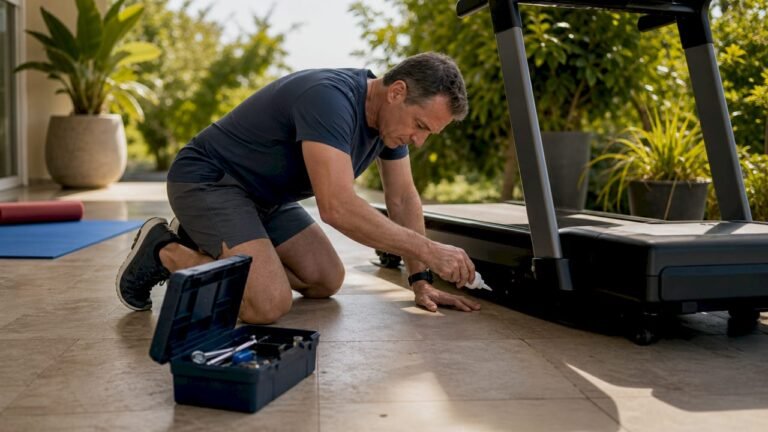
Stopping the cycle of treadmill repair failure reasons starts with a consistent, realistic maintenance routine. Here’s a practical sequence that works for most home treadmill owners:
- Lubricate the deck every 4 to 6 weeks if you use the machine three to five times per week. Increase frequency for heavier use or humid environments like South Texas.
- Check belt tension and alignment monthly. The belt should have about half an inch of lift on each side and track centered on the deck during operation.
- Clean the motor compartment every 3 months. Dust accumulation inside the motor housing causes unusual noises and accelerates wear. A can of compressed air handles most of it.
- Use a dedicated surge protector rated for motor loads, not a standard power strip.
- Inspect rollers and bearings every 6 months for roughness, wobble, or visible wear. Replacing a $30 bearing before it fails prevents a $200 motor repair.
- Schedule a professional inspection annually or any time the machine behaves unexpectedly, like shutting down mid-workout or displaying error codes you can’t trace.
DIY maintenance handles most of this well. But when symptoms return after maintenance, or when the treadmill throws error codes you can’t resolve through a treadmill troubleshooting guide, that’s the signal to bring in someone with diagnostic tools and experience.
Pro Tip: Keep a simple log of every maintenance action you perform, including date, what you did, and any symptoms you noticed. This log becomes invaluable when a technician visits and needs to understand the machine’s history quickly.
My take on the real frustration behind repeat repairs
I’ve seen the same scenario play out dozens of times. An owner calls frustrated because they’ve already paid for two or three repairs on the same treadmill and it keeps breaking down. When I look at the service history, the pattern is almost always identical. Parts were replaced. The underlying condition that destroyed those parts was never addressed.
What I’ve learned is that the frustration isn’t about the machine. Treadmills are well-engineered equipment. The frustration is about a repair process that prioritizes speed over accuracy. Swapping the obvious failed component is faster than diagnosing the system. But it doesn’t last, and owners end up paying two or three times for what should have been one thorough repair.
The thing I want every treadmill owner to understand is that these machines are systems. The belt, motor, control board, rollers, and power supply all affect each other. A problem in one area will eventually show up as a failure somewhere else. Once you see it that way, maintenance stops feeling like a burden and starts feeling like the straightforward protection it actually is.
The owners who call me least often are the ones who lubricate on schedule, check their belt tension, and use proper surge protection. Not because they got lucky. Because they stopped treating symptoms and started caring for the whole machine.
— Myles
Stop paying for repairs that don’t stick
If recurring treadmill problems are eating into your budget and your patience, the issue almost certainly isn’t the parts. It’s the diagnostic process.

Texastreadmillrepair specializes in exactly what most repair visits skip: finding the actual cause before touching a single component. Certified technicians come directly to your home or gym across South Texas, same week, with no transportation hassle and no surprise fees. Their flat-rate pricing and 90-day warranty on parts and labor mean you’re covered if something doesn’t hold. Whether you’re dealing with a slipping belt, an overheating motor, or an unresponsive console, their professional repair services are built around fixes that last, not fixes that buy you a few more weeks. For owners in the Mission area, local treadmill repair is available with the same diagnostic-first approach.
FAQ
Why do treadmill repairs keep failing after replacement?
Most repeat failures happen because the root cause was never identified. A worn belt damages the motor control board, so replacing the board without replacing the belt means the new board fails for the same reason.
How often should I lubricate my treadmill belt?
Lubricate every 4 to 6 weeks for average use of three to five sessions per week. High-use machines or those in humid environments may need more frequent attention.
Can a power surge cause my treadmill to break down repeatedly?
Yes. Voltage surges damage control systems and cause symptoms like erratic speeds and sudden shutdowns. A surge protector rated for motor loads is one of the most effective protections you can add.
Why does my treadmill keep shutting off mid-workout?
Repeated mid-workout shutdowns are usually triggered by a safety cutout responding to excessive resistance. High friction or belt misalignment are the most common causes. Addressing those conditions stops the shutdowns.
Is it worth repairing a treadmill that breaks down frequently?
Usually yes, if the repairs address the root cause rather than just replacing failed parts. A machine that gets proper diagnosis, correct tension adjustment, and regular lubrication can run reliably for many years at a fraction of replacement cost.


2 Comments